
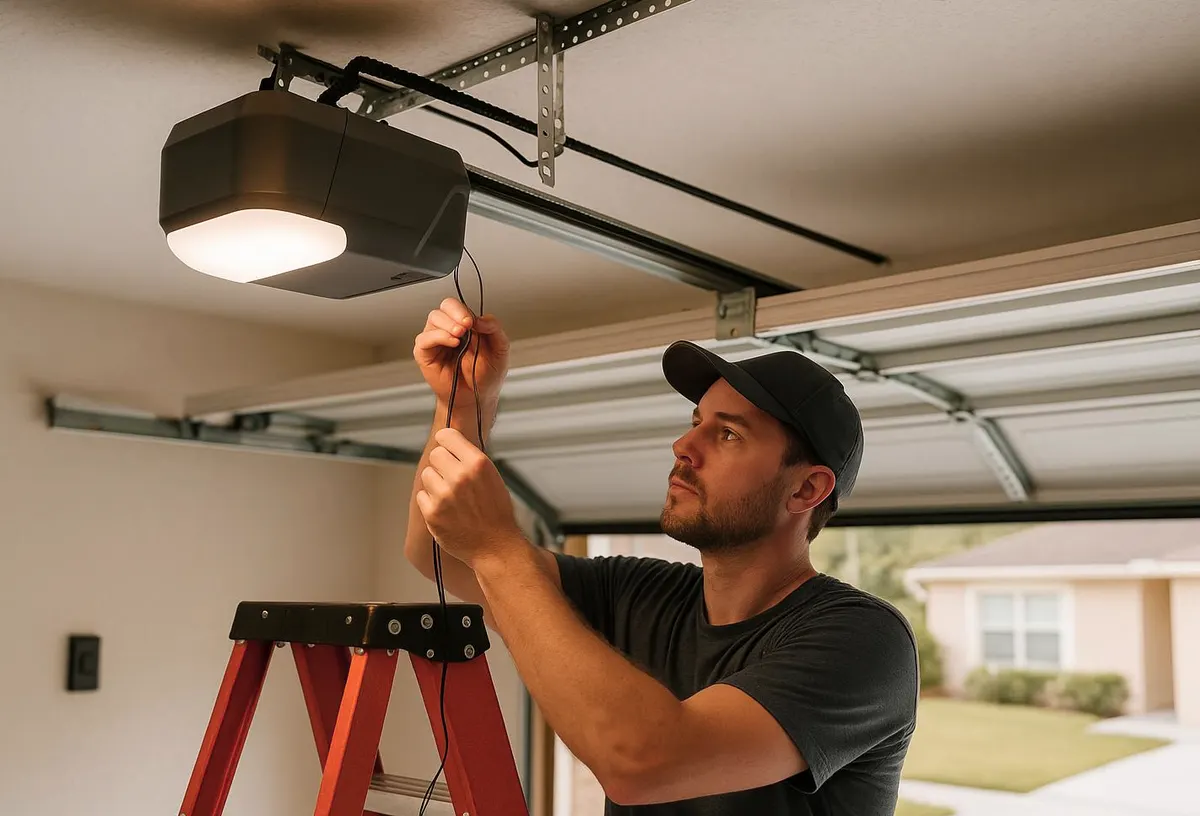
What a Technician Hears on a Typical Noise Call
Most service calls about a loud opener in this area start the same way: a homeowner describes a grinding or banging sound that's gotten worse over a few months. When a technician opens the garage, it's usually one of three things — loose hardware that's vibrated free from daily use, dry or rusted rollers that have never been lubricated, or a chain-drive opener straining against a track that's slightly out of alignment. Humidity plays a bigger role here than people expect. Moisture swells wood panels and softens the fit of hardware over time, and salt-tinged air closer to the coast speeds up rust on springs, hinges, and roller shafts. That combination turns a quiet door into a rattling one faster than it would in a drier climate.
Step-by-Step: Quieting a Loud Opener
Tools You'll Need
- Socket wrench set
- Silicone-based garage door lubricant (not WD-40, which attracts dust)
- Work gloves and safety glasses
- Flashlight
- A short level
- Identify the type of noise. Grinding usually means metal-on-metal wear in rollers or the opener's gears. Rattling points to loose bolts or brackets. A loud bang when the door opens or closes often means a hinge or roller has slipped off track slightly.
- Tighten all visible hardware. Go along the track brackets, hinges, and the opener's mounting bolts with a socket wrench. Vibration from daily operation loosens these over months, and it's the single most common fix for rattling.
- Lubricate hinges, rollers, and the track. Apply a silicone-based lubricant to every hinge pivot point and roller bearing. Avoid spraying the track itself if your door uses nylon rollers, since lubricant isn't needed there and can attract grit.
- Inspect the rollers. Plastic or nylon rollers that are cracked, flat-spotted, or visibly worn can usually be swapped by a homeowner with basic tools. Steel rollers with sealed bearings that are rusted or seized are a different story — those often need a technician, since removing them safely means dealing with the door under tension.
- Check the chain or belt tension. Most chain-drive openers have a tensioning bolt near the motor head. A chain that's too loose will slap against the rail with every cycle. Tighten it gradually, checking the owner's manual for the correct sag measurement.
- Consider a belt-drive conversion. If you've tightened, lubricated, and replaced rollers and the opener is still loud, the chain-drive mechanism itself may be the source of the noise. A belt-drive opener runs noticeably quieter and holds up well in humid conditions since there's no metal chain to corrode. This swap involves replacing the opener's drive system and is a job for a technician, not a weekend project.
- Have springs and cables inspected. If the noise includes a loud pop, snap, or the door suddenly feels heavier to lift, stop using the opener. Springs and cables are under extreme tension and should only be handled by a trained technician.
What's Safe for a Homeowner vs. What Needs a Technician
Tightening bolts, lubricating moving parts, and swapping worn plastic rollers are reasonable DIY tasks with basic tools. Anything involving the torsion or extension springs, the lift cables, or a full belt-drive opener installation should go to a technician. These components store enough force to cause serious injury if mishandled, and wind-load rated doors common in this region need to be reinstalled correctly to keep their rating intact.
When to Call Williston Garage Door Pro
If you've gone through the lubrication and tightening steps and the door is still loud, or if you notice rust on the springs or cables after a humid stretch, it's time to call in a technician. Williston Garage Door Pro handles both Cable & Roller Replacement and full Garage Door Opener Installation, including belt-drive upgrades for homeowners ready to leave the chain-drive noise behind for good. We'll also check the door's balance and track alignment while we're there, since a door that's working harder than it should is often the real reason it's loud in the first place.
Ready for a quieter garage door? Call Williston Garage Door Pro today to schedule a service visit in Williston, FL.