
The Mistake Most People Make First
The door won't budge, you're already running late, so you hit the remote again and again, or you grab the handle and muscle it up by hand. It's tempting because it usually works, at least partway, and you've got somewhere to be. But forcing a sticky door is how a simple fix turns into a bent track, a stripped opener gear, or a snapped cable. If the door is fighting you, something specific is wrong, and it's worth thirty seconds to figure out what before you push harder.
What a Sluggish or "Frozen" Door Actually Looks Like
Williston doesn't get hard freezes often, but cool, damp mornings after a front comes through are common from late fall into winter, and that combination of cold and humidity causes real problems. Homeowners usually describe one of these:
- The door lifts an inch or two, then the opener strains, hums, or reverses
- The bottom seal looks stuck flat against the concrete slab
- Rollers sound gritty or squeal instead of rolling smoothly
- The door feels noticeably heavier than usual when lifted manually
- There's visible condensation or a thin film of moisture on the tracks
None of these mean the door is literally frozen solid. In this part of Florida, it almost always means moisture has gotten into places it shouldn't, and the cold just makes it worse for a few hours.
Checking the Causes, in the Order a Technician Would
1. The Bottom Weather Seal
This is the first thing to rule out because it's the most common and the easiest to fix. The rubber seal along the bottom of the door can stick to a damp concrete slab overnight, especially after an afternoon downpour left water sitting at the threshold. The fix is simple: gently pry the seal free along its length rather than yanking the door up, then check the seal for cracking or flattening. A worn seal that's lost its flexibility will keep doing this and should be replaced, which is a quick, low-cost repair.
2. Track Alignment and Debris
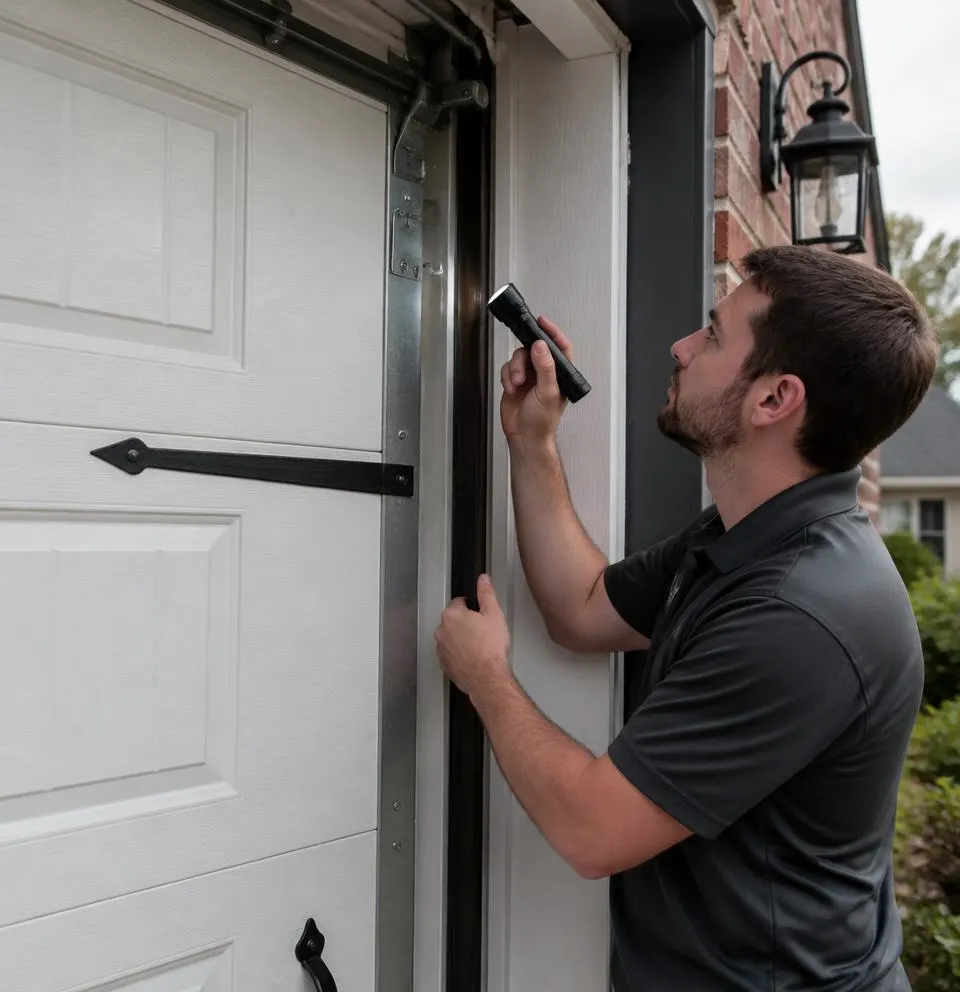
Next, a technician runs a hand along the tracks feeling for rust, grit, or standing moisture. Humid nights followed by warm days create condensation inside the garage, and that moisture settles on the metal tracks and invites rust, especially in garages that aren't fully sealed from outside air. The fix here involves cleaning the tracks with a dry cloth, checking alignment with a level, and lightly sanding any surface rust before it spreads. If a track is bent or pulled away from the frame, that's a separate off-track repair, not just a cleaning job.
3. Rollers and Hinges
Old grease thickens in cooler temperatures and doesn't flow the way it should, and rollers that have picked up rust from humidity will bind instead of rolling freely. A technician checks each roller by hand, feels for play or wobble, and listens for grinding. The fix is usually a fresh application of garage-door-specific lubricant on hinges and roller stems, not household oil, which attracts more dust and grime. Rollers with flat spots or heavy rust get swapped out rather than lubricated, since lubricant won't fix physical damage.
4. Spring Tension
Metal springs lose a small amount of flexibility in colder temperatures, and if a spring was already near the end of its service life, a cool morning is often when it finally shows. Symptoms include the door feeling unusually heavy, the opener working harder than normal, or the door closing crooked. Checking spring tension is not a homeowner task, since these springs are under heavy load and can cause injury if handled incorrectly. A technician tests tension, inspects for visible wear or gaps in the coils, and replaces the spring if it's reaching the end of its typical cycle life.
5. Opener Sensors and Settings
Last, if the mechanical parts check out, the opener itself gets tested. Condensation on the photo-eye sensors near the floor can cause the opener to think something is blocking the door, leading to reversals that look like the door is stuck. Wiping the sensor lenses dry and checking that they're properly aligned usually resolves this. If the force or limit settings have drifted, those get recalibrated so the opener isn't straining against resistance that isn't really there.
When to Call Williston Garage Door Pro
If you've checked the seal and wiped down the tracks and the door is still sluggish, straining, or reversing, it's time to call in a technician rather than keep testing it yourself, especially if springs or cables are suspected. Our Garage Door Maintenance & Tune-Up service covers exactly this kind of seasonal check: lubrication, roller inspection, track alignment, and sensor cleaning in one visit. If a roller or cable is visibly worn or rusted, our Cable & Roller Replacement service gets the door moving smoothly again without waiting for a full failure.
If your garage door is giving you trouble this season, give Williston Garage Door Pro a call. We serve homeowners throughout Williston, FL and the surrounding area, and we're glad to take a look before a small issue turns into a stuck door and a missed morning.